We’re delighted to share some exciting news from the Buy Land Plant Trees project: we have purchased Knock Murton, 145 acres of striking fellside near Lamplugh in West Cumbria, increasing our land to 350 acres!
This purchase has been made possible through a combination of funding from Chimney Sheepand the support of a generous private donor who shares our long‑term vision for ecological recovery in the Lake District fringe.
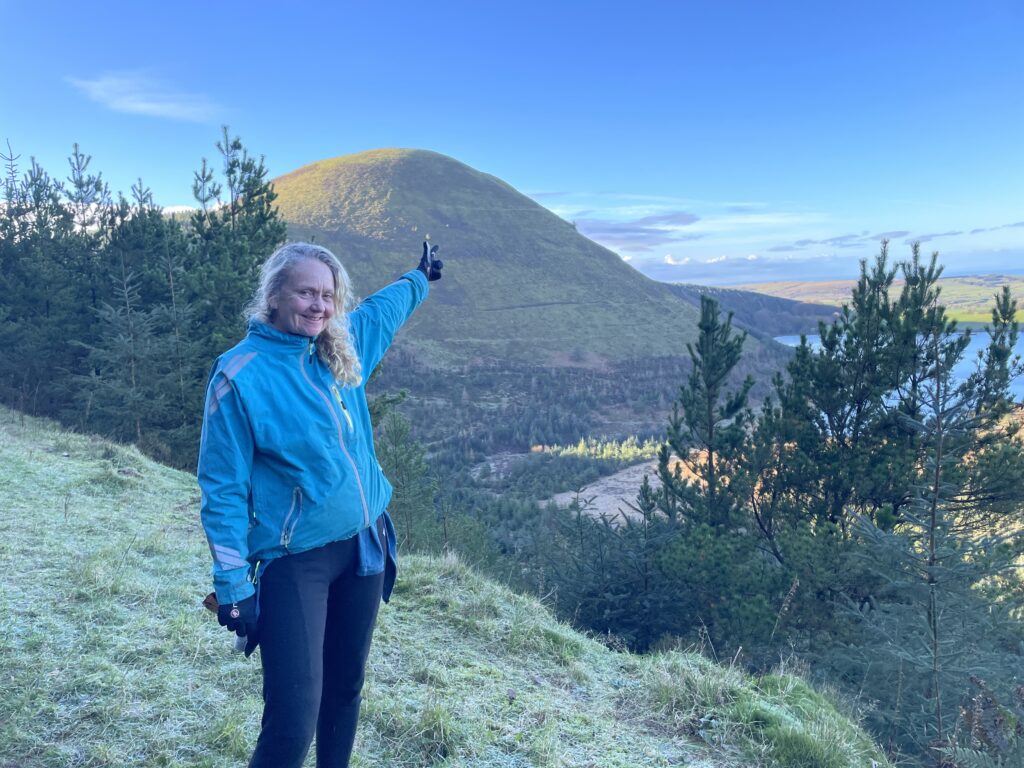
Sally of Chimney Sheep pointing at Knock Murton as seen from the Cogra Moss plantation
A landscape ready for renewal
Knock Murton sits on the western edge of the Cumbrian fells — a place shaped by centuries of grazing, extraction, and exposure to the elements. It’s a landscape with scars, but also with extraordinary potential. The slopes hold the memory of woodland that once ran from valley floor to ridge, and the soils still carry the seedbank and structure needed for natural processes to return.
Our aim is simple and long‑term:
allow woodland to regenerate where it wants to
plant where it helps accelerate recovery
restore habitats that support wildlife, water resilience, and soil health
create a landscape that can thrive without intensive human intervention
This is not about imposing a design. It’s about giving the land the time, space, and protection it needs to heal.
Why Knock Murton matters
The site forms a natural ecological bridge between existing woodland pockets, upland heath, and lower‑level farmland. Restoring it will help:
expand habitat for wildlife
stabilise soils and reduce runoff into local rivers
increase carbon storage over the coming decades
create a more resilient mosaic of habitats across West Cumbria
It also strengthens the growing network of restoration sites we’re building across the region — each one a small but meaningful step toward a healthier landscape.
Made possible by people who care
This purchase wouldn’t have happened without the continued support of Chimney Sheep customers, whose purchases directly fund land restoration, and the generosity of a donor who believes in the power of long‑term, practical environmental action.
Together, you’ve helped secure a piece of land that will now be protected and restored for generations.
What happens next
Over the coming months we’ll begin baseline surveys, mapping existing habitats, soils, and hydrology. From there, we’ll develop a restoration plan that blends natural regeneration with targeted planting, always guided by what the land itself is telling us.
As with all our sites, we’ll share updates as the work unfolds — slowly, season by season, in the way real restoration always does.
To our amazement, we reported that we had planted 300,000 trees last December. Since then, we’ve planted even more – 100,000 more at Lodge Castle, our newest site taking our total so far to 400,000.
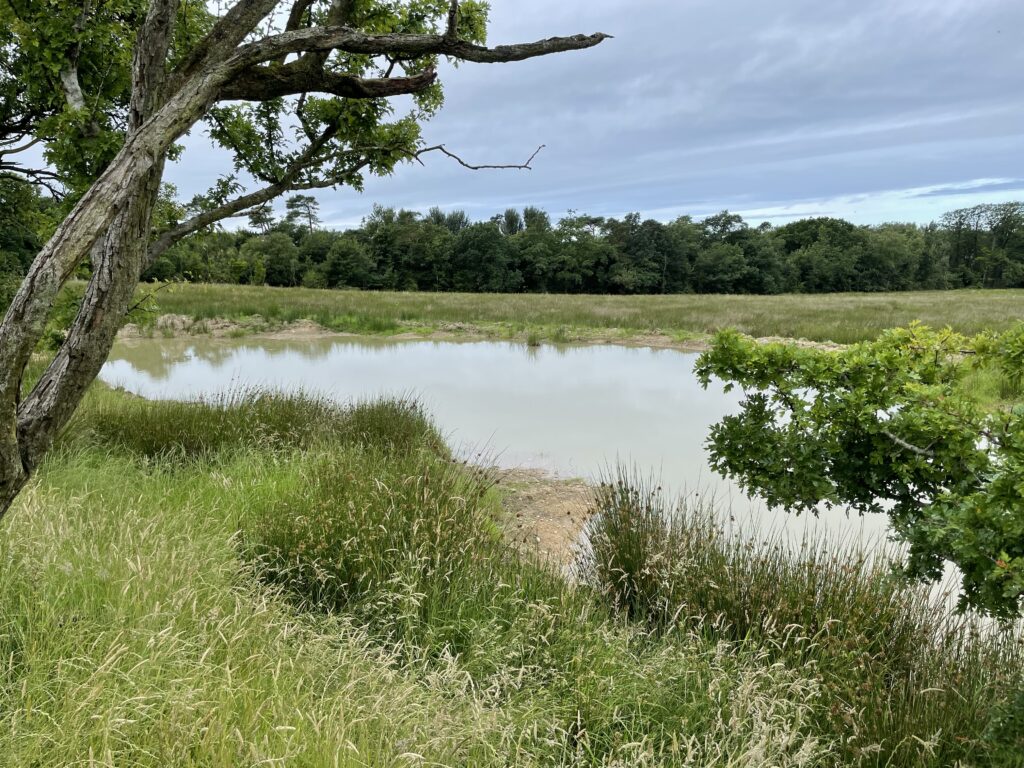
We took the metaphorical keys to Lodge Castle in November 2024, and by March 2025, we had dug 6 ponds and planted a new 26-acre woodland that will help connect existing woodlands, creating continuous canopy cover stretching more than 4km.
Pond 3 at Lodge Castle (July 2025)
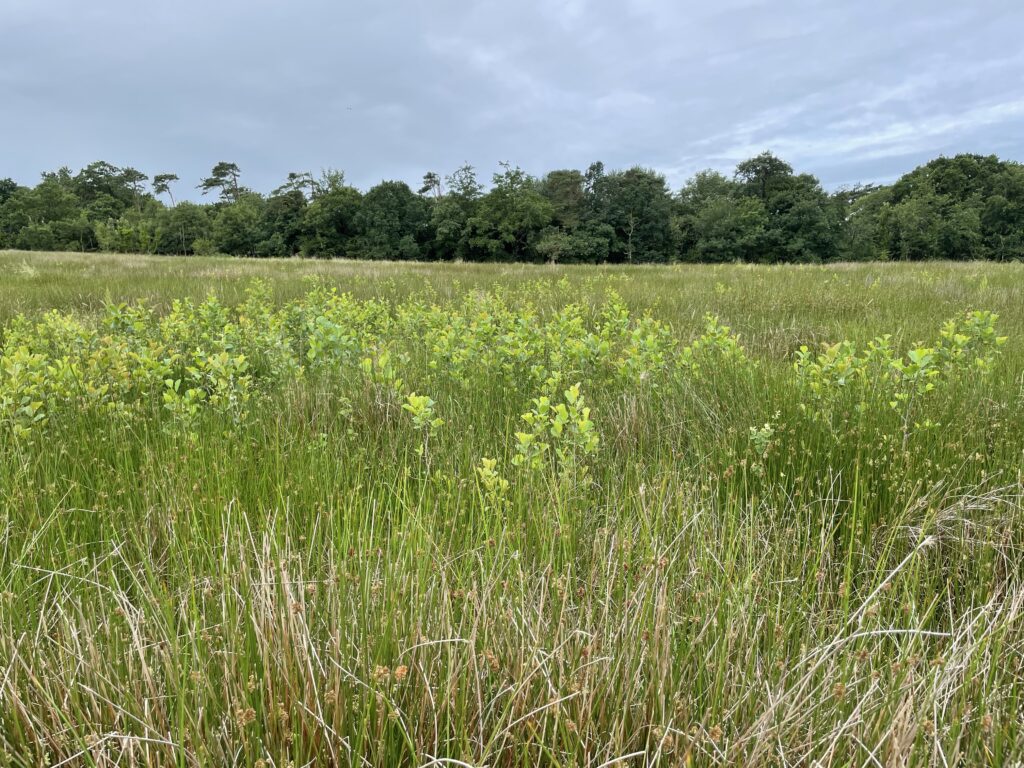
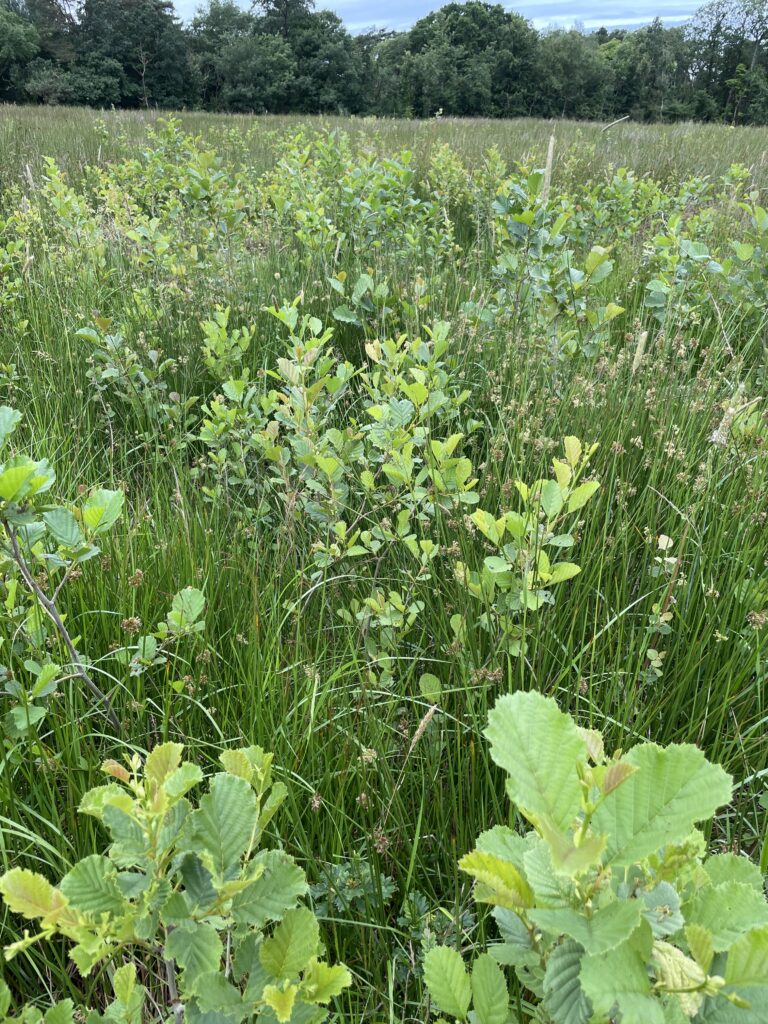
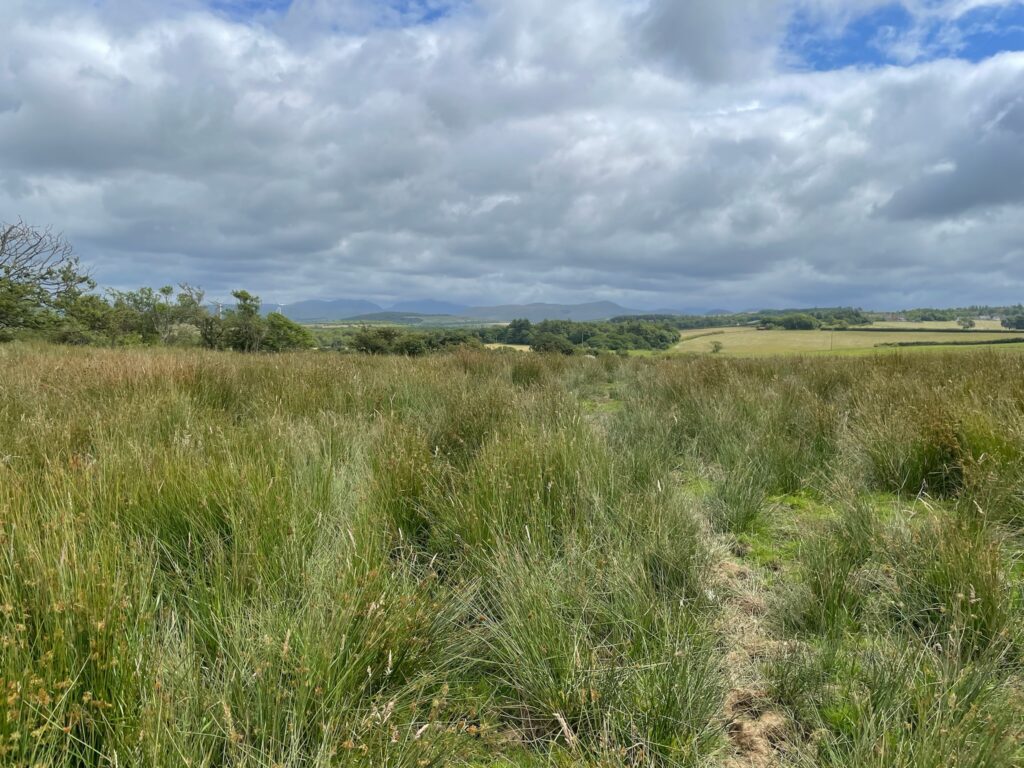
The site is very Juncus sp (rushes or locally known as seaves) dominated as the ground is usually wet. There are some very small areas of grass, but the majority of the site is thick thigh-high rushes, which you would think would overwhelm the young trees; but the opposite is proving to be true.
The rushes protected the young trees from the extremely dry late winter/spring period and shaded the ground, preventing it becoming baked hard. Where we planted in grass, the trees struggled with some dying back to preserve moisture, but in the rushes, the saplings took the drought (the most severe drought since 1893) in their stride. The alder and willow especially liking the environment.
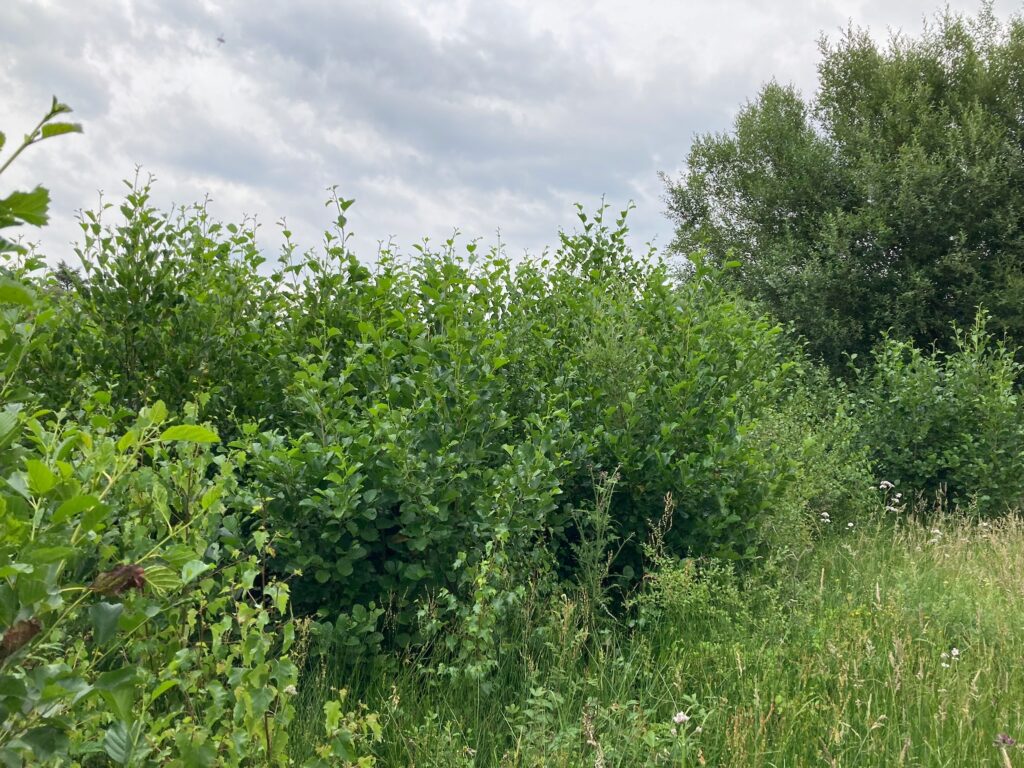
Alder planted earlier in the season growing successfully in the Juncus dominated landscape (July 2025)Cluster planted alder growing very well in the rushes (July 2025)
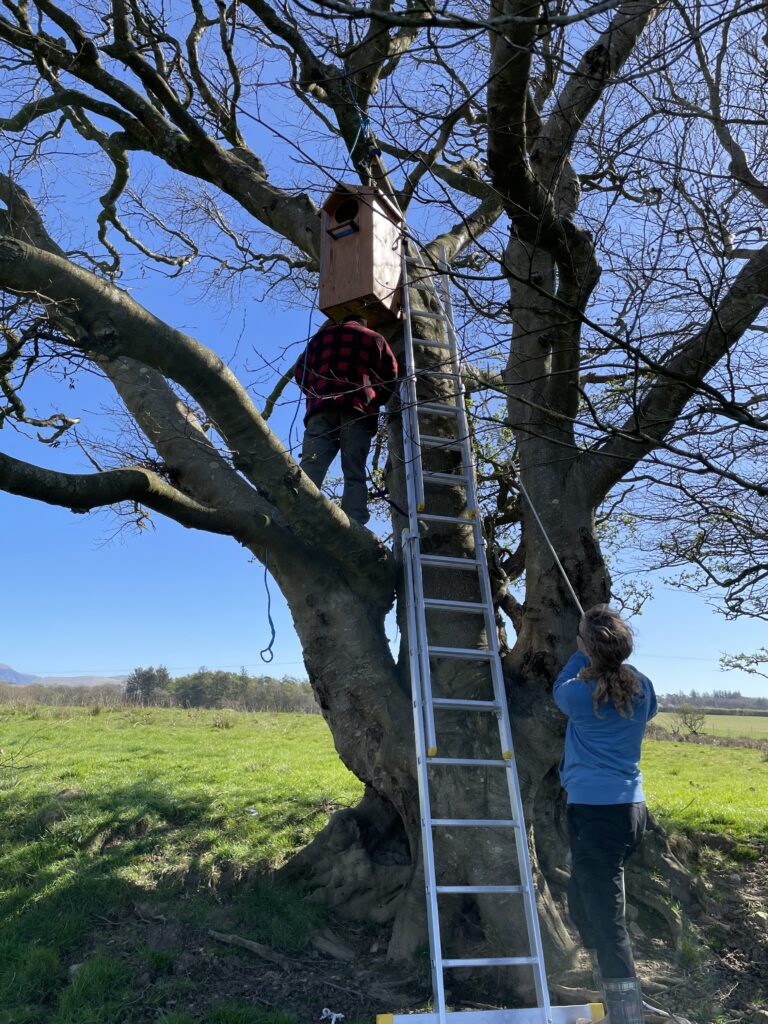
We also installed two owl boxes in the hope that we can attract some barn owls to take up residence. No success yet, but they only got installed in April. Keep an eye out for new updates. I’m sure we’ll let you know if we get some owls moving in.
One of the owl boxes made and installed by Rob Stephenson with a little help from Sally (April 2025)
2024 marks a milestone year for us—we’ve reached 300,000 trees planted, a figure that seemed unimaginable when we started four years ago. Back then, planting a few hundred trees felt like a massive achievement. Most of our trees have been planted at the Low Fell and Raven Crag site, our largest and most challenging location. Those following our progress know we plant in dense clusters to replicate natural regeneration, avoid tubes and stakes, and speed up the transition to woodland.
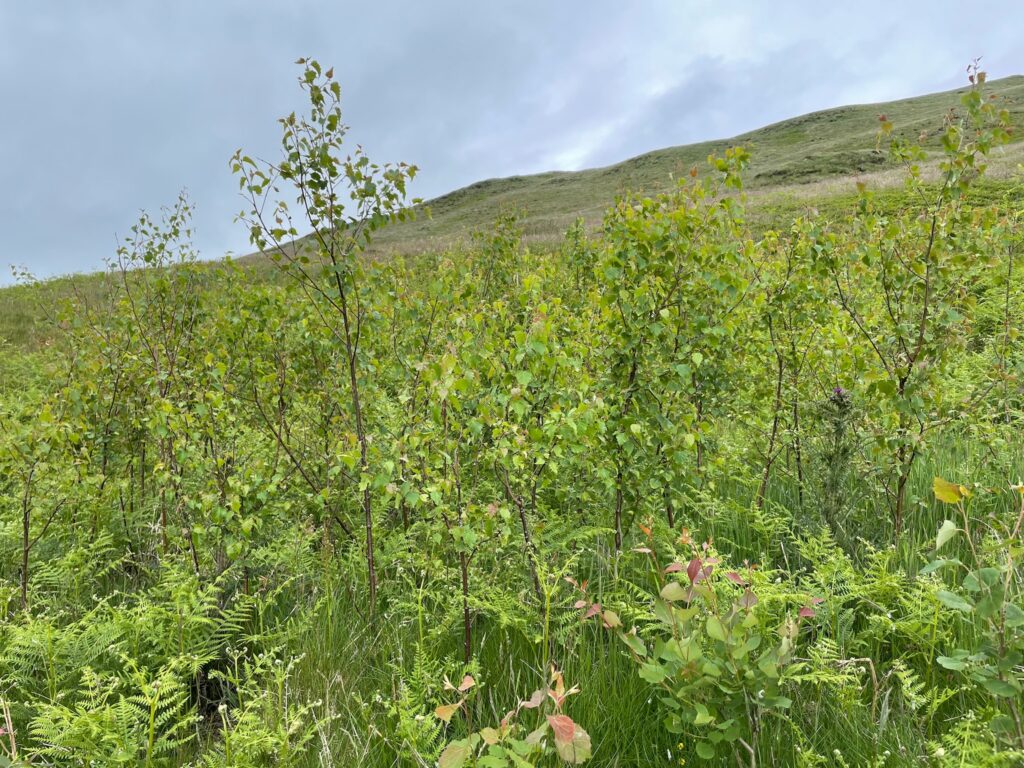
Birch and aspen saplings enjoying their new ‘forever’ home.
Over the past couple of years, the trees have become well-established, overcoming bracken and extreme winds that regularly pummel the Fells. Year three is a critical milestone for tree establishment, as saplings begin to acclimatize to their new, permanent home and thrive in their surroundings.
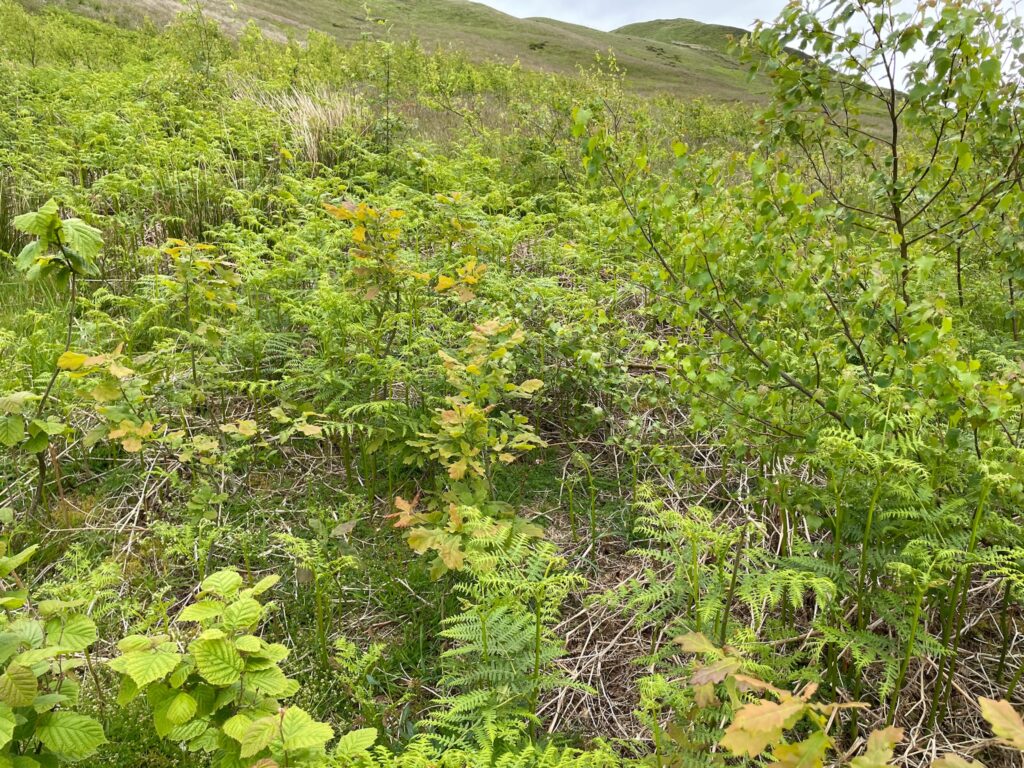
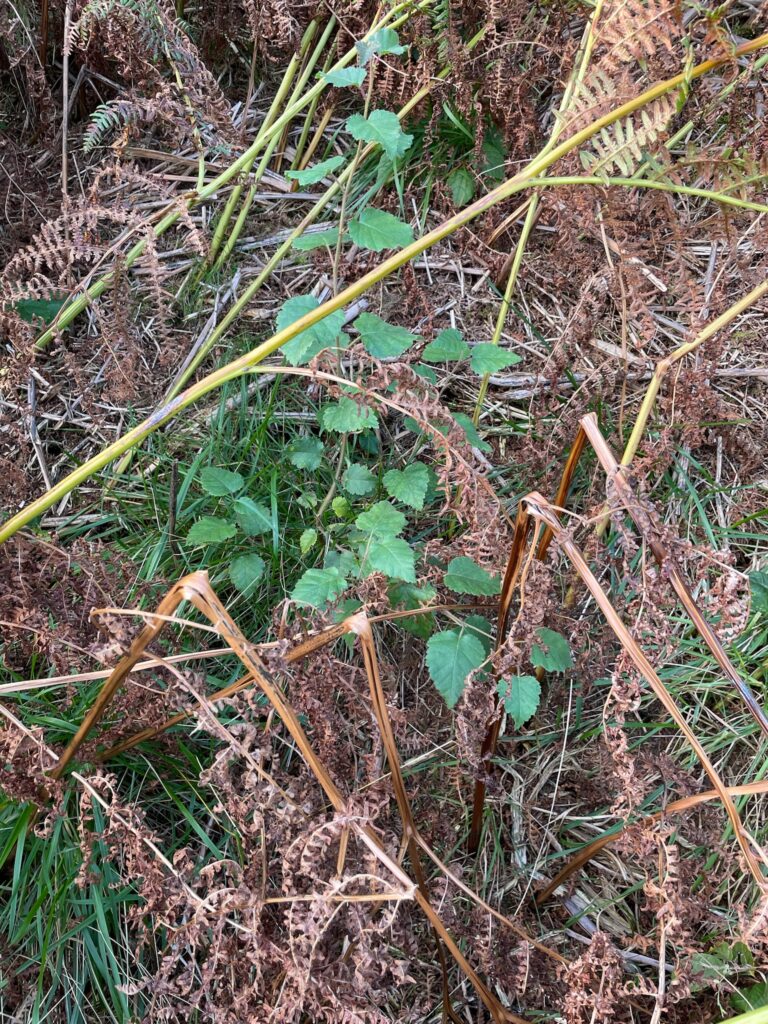
Recent photos show clear copses of trees starting to transform the landscape and thriving. The best-performing clusters are those planted directly into the bracken without prior treatment. Contrary to the belief that trees can’t be established in bracken, we’ve observed that bracken acts as mini-nurse trees, protecting rather than suppressing the saplings.
Birch, oak and hazel saplings getting a head start before the bracken comes up.
Seeds struggle to establish in bracken due to the thick mulch of dead bracken, but saplings push through, benefiting from the shading bracken provides during droughts. This shading helps prevent the ground from drying out too quickly, hides young trees from deer, and creates a micro-climate that extends the growing season. Planting densely without tubes is key to establishing trees in this environment.
Downy birch sapling growing through bracken.
2024 also saw us surpass 200 acres of land—a small amount compared to other organizations, but we’re amazed at how much we’ve grown in such a short period. BLPT remains entirely voluntary, run by Sally of Chimney Sheep and me (Darren), driven by our belief that restoring nature and allowing it to flourish is the world’s top priority. 😊
Today we can announce some exciting news! We have acquired a new site, another 26 acres to be given back to nature.
The site located near Distington increases our holdings to 204 acres (82.5 hectares) and was acquired with generous help from Raise: Cumbria Community Forest via the Trees for Climate programme, funded by the Department for the Environment, Food and Rural Affairs through the Nature for Climate Fund.
Lodge Castle Wood will see 70,000 new trees and 6 new ponds installed as part of our mission to hand back poor agricultural land to nature.
If all goes to plan we aim to complete the project in 1 year. That is, from finding the site to planting the last tree and digging the last pond. In anticipation, we have already gone through an EIA screening, sourced the trees, and appointed the contractors.
Planting is traditionally done with 2 metre spacing, providing each tree with a tube shelter and stake. This is the method advocated by the forestry commission and is based on the desire to create straight stemmed crops to harvest. The tubes protect the trees from animal browsing, and act as a vertical greenhouse, creating optimum conditions for trees to grow into straight specimens.
Cluster planting of trees without guards, Crabtreebeck, Low Fell
We are planting for carbon sequestration, flood mitigation and biodiversity. Trees that are not straight specimens is the desired outcome; we want them to look as natural as possible. Damage from predators, so long as it does not kill the tree, adds to the naturalness of the final woodland. Many species naturally coppice after being browsed or barked and grow back multi-stemmed, often more resilient.
We don’t use tubes or stakes; we plant larger numbers of trees in dense clusters. The reason we don’t use tubes is:
It’s an exposed, windy site and the tubes would increase the wind resistance of the trees and make it more likely they would be blown over.
Trees grown in tubes in windy locations tend to snap easily once they out-grow the tubes.
There is a large amount of embodied carbon in the plastic and stakes; we plant trees for carbon capture, so they set off at a deficit if planted with tubes.
Access is difficult; it would be hard to get tubes and stakes on site and even harder to remove them once the trees had grown.
We plant into bracken and other tall vegetation, and tubes would increase the light deprivation of the trees.
They cost more money and time, and for the same cost we can plant five times as many trees.
They are unsightly, and we are planting in a visually sensitive landscape in the Lake District National Park which is a World Heritage site.
There are, of course, some disadvantages to not using tubes and stakes. We plant into bracken, without controlling it first. The bracken provides high quality humus soil, and in the summer protects saplings from dehydration. However, the bracken grows bigger than the saplings and overshadows them, depriving them of light. If the trees are in a tube this can be a problem, but without a tube the sapling puts out more lateral branches and these enable it to take maximum advantage of the restricted light. We have also noticed that the leaves turn much darker green, so the plant creates higher levels of chlorophyll to combat the low light levels. The leaves stay green longer than the bracken, giving the trees an opportunity to put on another growth spurt in the autumn. The trees produce leaves and start growing earlier in the spring than the bracken. Within a couple of years the trees outgrow the bracken, by which time they in turn deprive the bracken of light and eventually the bracken dies back, giving way to the woodland plants that have been waiting for the woodland to return.
Cluster planting in bracken without guards, Low Fell
There is a concern that bracken will crush the saplings when it dies back in the autumn. However, by planting in dense clusters of mixed tree species, the saplings support each other against the weight of the fallen foliage and protect themselves from being squashed.
Cluster planting replicates the way trees naturally re-colonise in the wild. The trees compete with one another but protect each other too, sharing nutrients and sheltering one another from predators. We plant in random shaped blobs a few metres in diameter (not wall to wall trees, that would be extravagant indeed!). Woodland edges tend to be where biodiversity is greatest, so planting in clusters creates a lot of edges.
The main disadvantage for us of not using guards is damage from voles. However, voles can get under regular tree guards. We do sometimes use vole guards, but on the whole we do what we can to encourage natural predation, such as erecting owl boxes and raptor perches.
We are lucky enough not to have had any rabbit damage at any of our sites. A great many of the trees are snipped off by hares (they don’t even eat the trees, just snip them in half as though irritated by their presence!). What we have observed is that the trees actually grow back more vigorously after the hare-snip so we stopped being concerned about that. And deer, well, they can be annoying. Again, a bit of browsing doesn’t matter at all, the trees will produce more leaves. The barking by the bucks can be very damaging but the advantage of planting in dense clusters is that the bucks don’t get through to the trees in the centre of the cluster. The edges that are barked sometimes coppice themselves, depending on the species of tree. And again, if the trees are planted in dense bracken, the bracken protects the trees in July when it’s the roe-deer rut. It’s a different matter with other species of deer, or other locations, but on our sites cluster planting without tubes or stakes has been successful.
Just as trees compete and collaborate in the wild, our densely planted saplings do too. There’s an element of attrition built in to this way of growing trees.
Cluster planting in bracken without guards, Low Fell
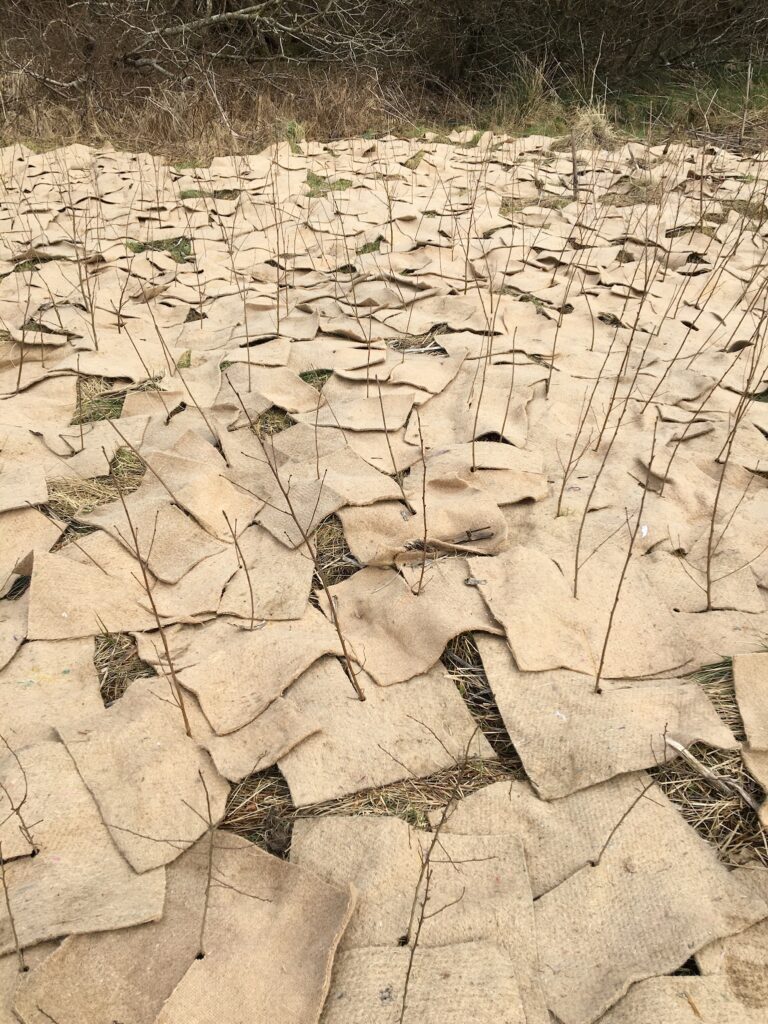
In 2021 we started to plant up our 13 Acre site with 25,000 trees in a series of dense clusters. The mix was of mostly fast growing varieties suited to the wet ground such as alder, willow, aspen and birch. These where planted as 450-600mm whips and mulched with jute mulch mats to supress some of the vigorous grass and vegetation growth around them and give them a head start in the very competitive world of plants… and it worked!
After only two and half seasons growth some of the saplings are now towering above the surrounding vegetation.
Trees mulched with jute mulch mats from Chimney Sheep to give them a head start. Winter 2021Alder and birch clusterThe same cluster in their 3rd season. Amazing growth and success at 13 Acre. (August 2023)
Earlier this year, thanks to The Woodland Trust, we completed the pilot scheme to plant 20,000 trees of birch, rowan, thorns and other smaller scrub species. These were bolstered by another 15,000 later in the same season funded by Cumbria Wild Life Trust’s Pollinator Project.
As we don’t like to use guards there is a risk that rogue sheep, hare and deer can cause damage but luckily that damage is less than we had expected and almost all the whips have survived. A fair few have been nibbled but as these are scrub species they are less vulnerable, and if not eaten too much benefit from a bit of natural pruning.
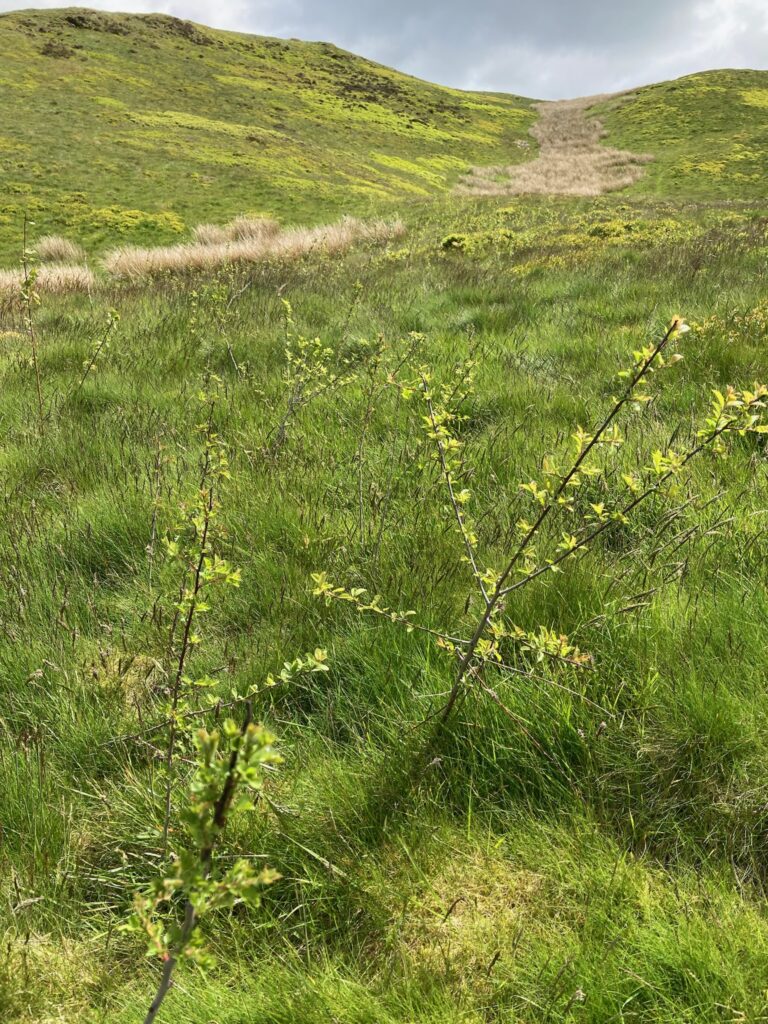
It’s only the first season so we can’t claim any success yet but we are quietly confident that the pilot will be a success and Low Fell will have trees again after several hundred years of being bereft of anything higher than knee height.
Birch, rowan and blackthorn on the back side of Raven Crag (photo taken: June 2022)Blackthorn at Low Fell (photo taken: June 2022)Rowan on Darling How with the Solway and Scotland in the distance (photo taken: June 2022)Birch and thorns on Low Fell planted in 2021/22 (photo taken: June 2022)
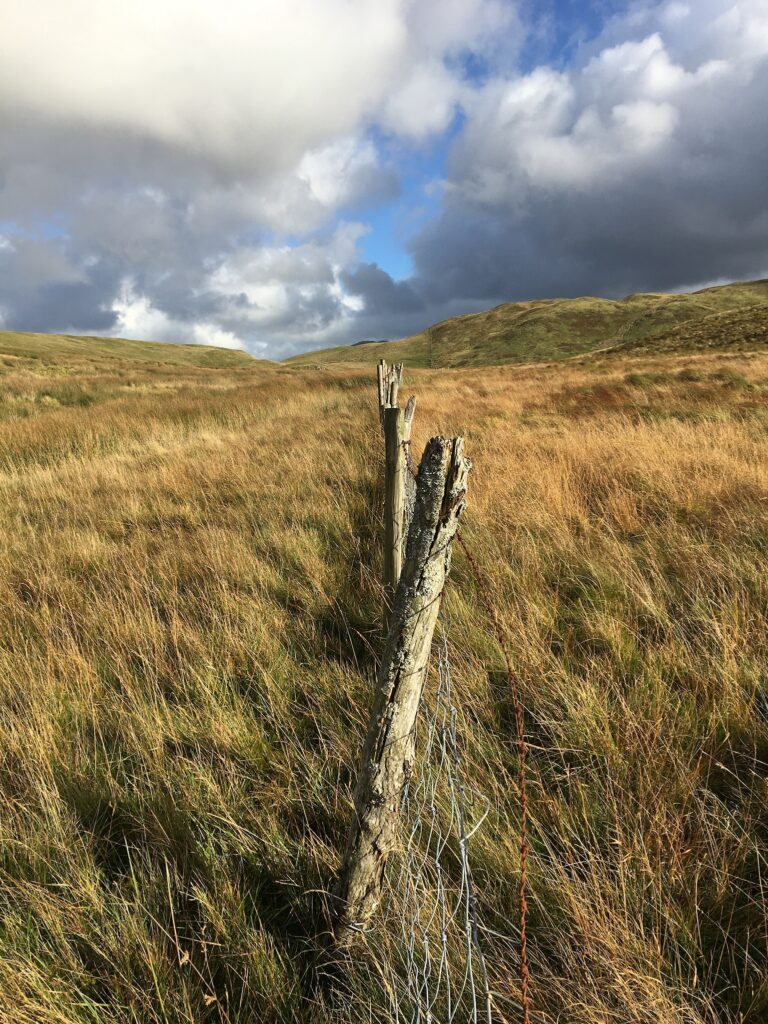
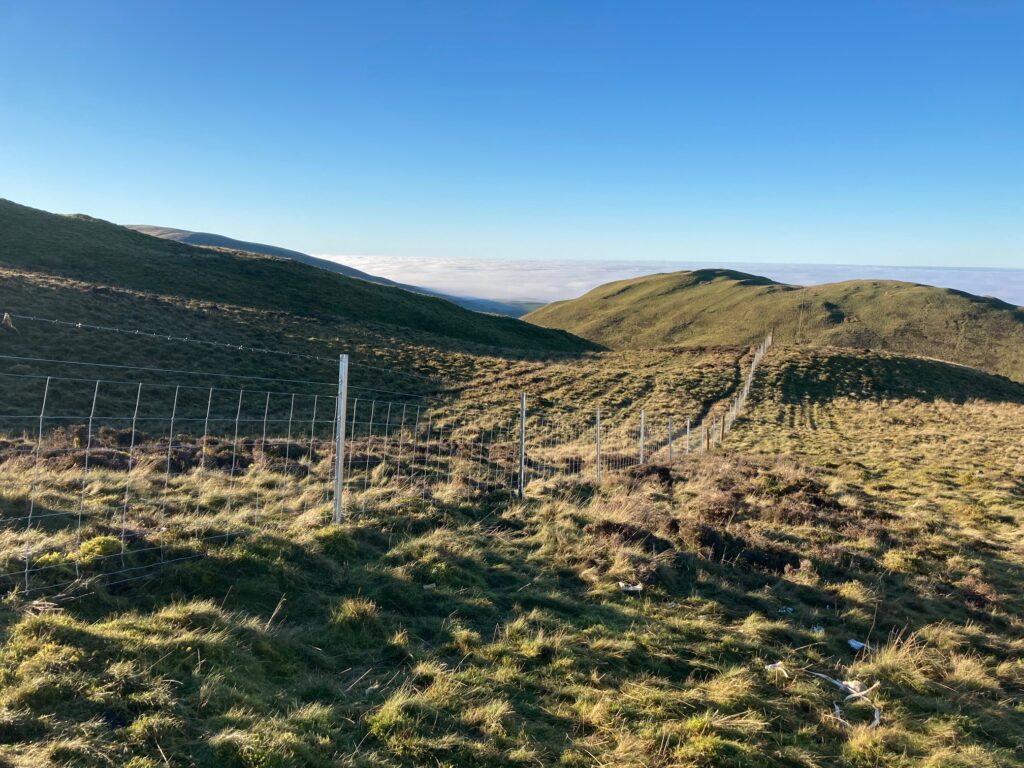
Before anything can start at Low Fell the fences needed to be fixed. Fencing isn’t the easiest of jobs in the first place but when it’s up a 35 degree slope and 1.5km long it’s not easy at all. It is essential, however, without it we can not control the sheep that eagerly eat everything growing on it.
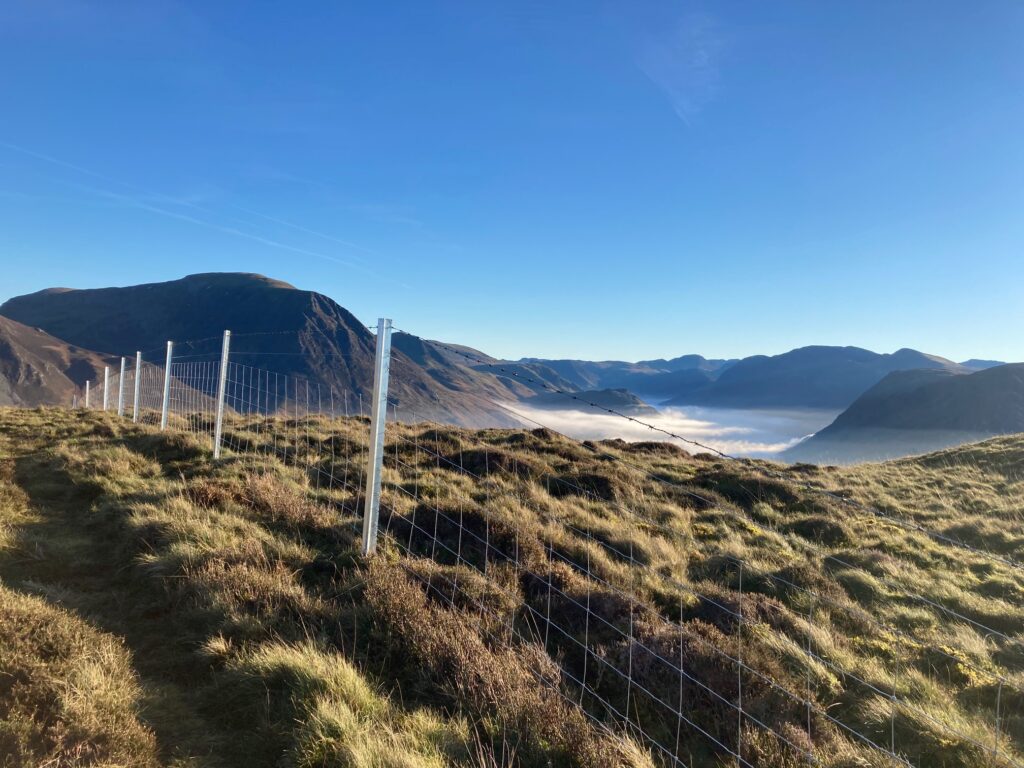
The new fence was installed at the end of 2021 ready for the winter planting season. We chose a galvanised steel post product that we hope will last for many decades.
Post and wire fence needing some repair work at Low FellLooking down the new fence towards Darling FellShiny new fence looking towards Crummock Water during a spectacular cloud inversion